Most design firms document decisions. They just document them somewhere nobody looks.
After talking to more than 150 design professionals, I found something I did not expect. The problem was not that firms skipped documentation entirely. The problem was that decisions were being captured in the wrong place. Sometimes not captured at all. Over and over, on every project, by people who were trying to be organized.
The decision made it somewhere. Just not somewhere retrievable.
Here are the four places I keep hearing about.
The inbox thread
The approval happened in email. Everyone knows this. It is in the project email.
But the project has 600 emails. The approval is in reply number 14 of a thread that started about something else. The subject line is RE: RE: RE: Site visit follow-up. The tile approval is buried between a question about the permit timeline and a request to move a meeting.
It is documented. Nobody will find it in thirty seconds.
The inbox is a communication tool. It is not a decision record. Most design firms use it as both. It is one of the reasons this problem is so consistent.
The notes app
This one is quieter. It does not announce itself.
A designer takes notes on her phone during the site visit. The client approved the backsplash in the kitchen. She wrote it down. Good.
Those notes are in her personal notes app. Accessible to her. To no one else on the project. When she takes a leave, the notes leave with her. When the client asks about the backsplash decision three months later, the record exists in a place nobody can access.
I have heard this one from project managers, from designers, from principals. The personal notes habit is trained into practitioners who have been burned by lost information. The notes exist. They are not the problem. Where they live is the problem.
The verbal-only close
The hardest one to defend against.
The call ends well. The client approved the direction. Everyone heard it. The designer's job was to get the answer, not to document it on a still-running call.
Nobody sends a recap. The next task takes over. The approval is real. The record is not.
This one is different from the other three. The inbox thread, the notes app, and the version filename all have a record. It is in the wrong place, or inaccessible, or ambiguous. But it exists. The verbal-only close has nothing. There is no wrong place. There is no place at all.
Verbal-only closes are the most common source of disputes I hear about. Not because anyone is dishonest. Because unrecorded agreements are not provable agreements. Memory diverges. Projects move. The approval that happened verbally on a Thursday has no evidence six months later when the invoice is disputed.
The version filename
Kitchen_Island_V3_FINAL_CLIENT.pdf.
The approval is implied in the filename. The client saw this version and gave the green light. That is what everyone remembers.
Except: was it this file or V3_FINAL_CLIENT_REVISED? And when exactly was the approval given? And was the approval for the whole document or the dimension on page 4? And who on the client's side approved it?
Version control is documentation. But version control without an approval record attached to it is just file management. The decision lived in the conversation around the file, not in the file itself.
Making decisions findable
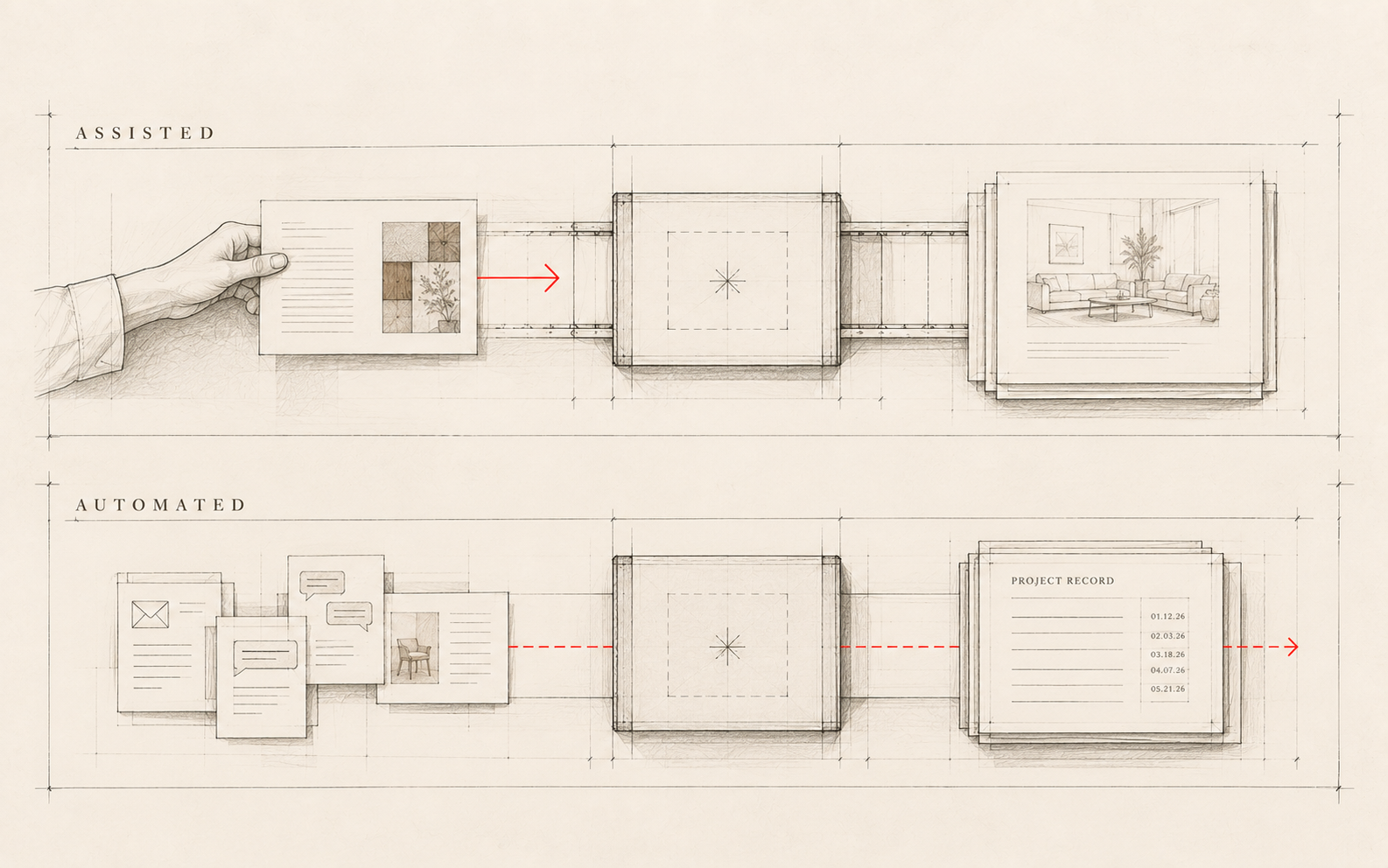
The solution to all four starts in the same place. A single system of record that captures decisions regardless of where they originate.
The email thread, the approval message, the follow-up after the site visit, the comment on a drawing revision. The record should build from the communications that surround every decision.
That is what Archen™ does. It reads your existing project communications and builds the decision record automatically. The approval is findable whether it lived in an inbox or a file revision thread. Zero entry from your team.
The verbal-only close is the harder case. If nothing was written, nothing can be captured automatically. The habit that fixes it is simple: two sentences in any channel before the call ends. Then the record exists. Then Archen™ can do the rest.
Most design firms do not have a documentation problem. They have a retrieval problem.
The decisions are there. Archen™ makes them findable.