I'm not an outsider who found a market. I'm someone who lived the problem, hid from it like everyone else.
I watched my husband lose an hour every time he picked a project back up, and I said, there has to be a tool for this. There wasn't. So I built it.
He does 3D renderings for designers. His whole job is the visual, the thing you put in front of a client. But one of his clients started treating him like a personal designer, emailing, calling, texting, adding new people to the project without warning. They trust his judgment and bring him everything, and his actual job, the renderings, becomes the smallest part of what they ask for.
Every time he has to pick that project back up, he loses an hour just remembering where it stands. The decision is in an email. The change is in a text. The context is on a call that nobody wrote down. He is fishing through five different kinds of communication to reconstruct something that was already decided, and by the time he finds it, half the morning is gone.
That is the origin story, and it is true, but it is not the real story. The real story is what I understood while I was building it, which is why this problem exists in the first place. It is not the reason most people think.
I am not an outsider who found a market. I am someone who lived the problem, hid from it like everyone else, and then went and built the thing that would have saved me.
I spent seven years on the other side of this
Before I was a builder, I was an interior designer for seven years. I started interning in architecture and design offices the summer I graduated high school, and I worked at large firms and at boutique ones. Boutique was always my preference, because in a small studio you have your hands in every part of the process.
The part nobody in this industry says out loud
I learned that design is only half the job the hard way. The other half is being the middleman, the person holding every thread together, the secretary between the client, the vendors, the contractor, and your own team. Some designers are built for that. I am happiest in the design and the creative work, which is exactly why the other half always felt like a tax on the part I loved. I did not want to manage the communication. I wanted to do the work the communication was about.
Here is the thing I believe that I have not heard anyone else in design say.
Firms do not lose knowledge because people are careless. They lose it because people are overwhelmed, and underneath the overwhelm there is something quieter and harder to admit. Fear.
When something slips on a project, when a decision never got shared, when the approval you were sure you sent is nowhere to be found, the instinct is not to document it. The instinct is to quietly fix it before your boss or your client notices. You solve it on your own, you keep what you learned on your own device, and you tell no one, because letting anyone see there was a problem feels worse than quietly handling it.
I know this because I did it. When I was the designer, I was the one who caught the problem and quietly solved it before anyone knew there was one. A fifteen-thousand-dollar outdoor sunbed I had approved for a client could not be returned after I realized I had never actually measured whether it would fit, and I spent the next six months quietly trying to find a way to recover that cost. I never did.
Plenty of things drain a design firm, and I will not pretend fear is the only one. Deadlines, turnover, tools built for data entry nobody has time to do, they all take their cut. But fear is the one nobody names, because while it is happening it looks like diligence. The knowledge that runs the firm ends up scattered across personal inboxes and private notes, and part of the reason is that a person was afraid, and solving it quietly felt safer than surfacing it.
A memory the firm keeps takes the fear out of it
This is the quiet thing project memory does that a project management tool never will.
When the record just exists, you cannot be caught failing to document something you never had to document in the first place. The fear has nothing to feed on. Nobody has to decide, in a busy week, whether to log the thing or let it slide, because that moment of choice, the one where fear usually wins, is gone. The knowledge stops leaking out of the firm.
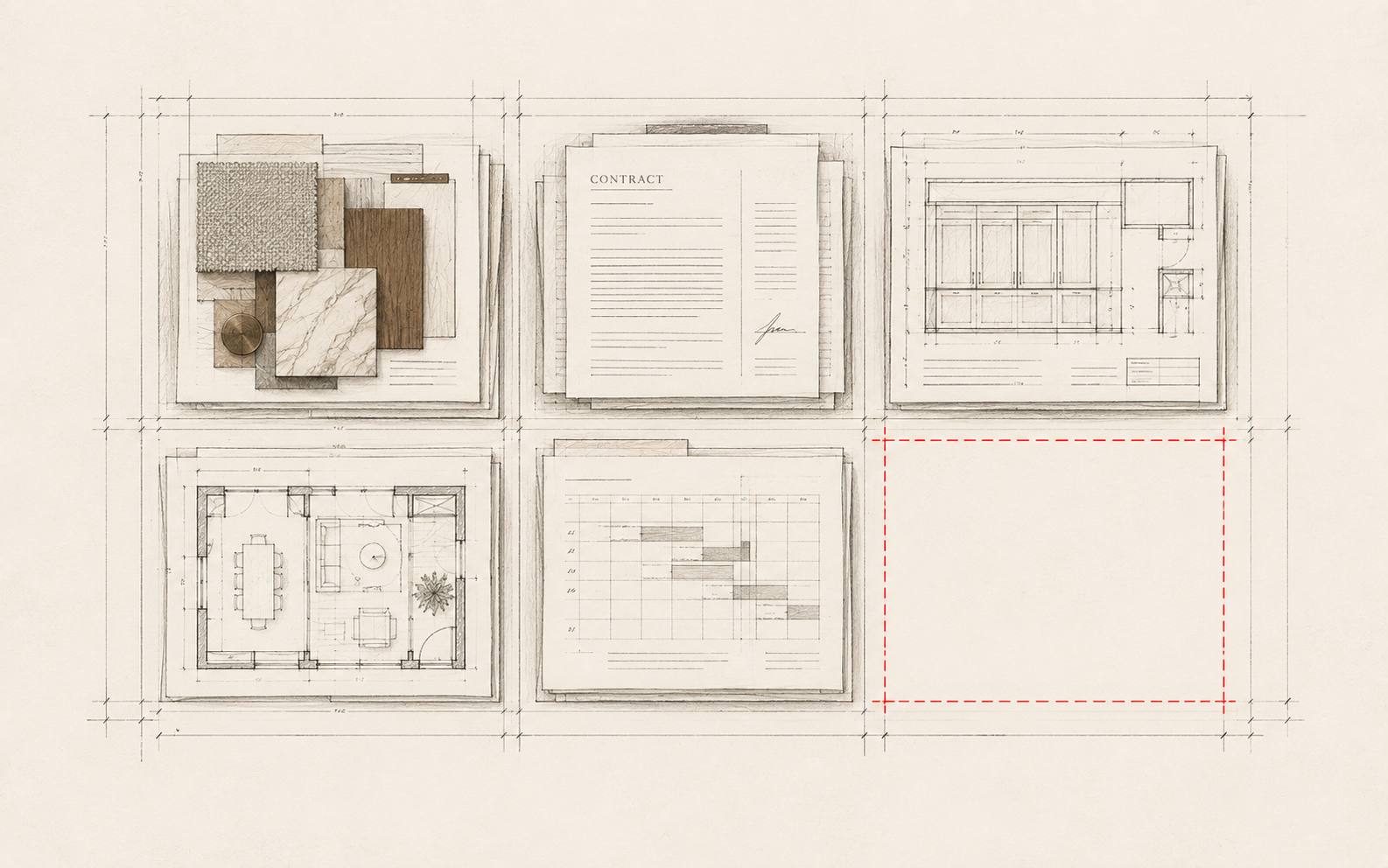
Not a place to enter data. A memory the firm keeps whether or not anyone remembered to keep it.
Where I pointed it
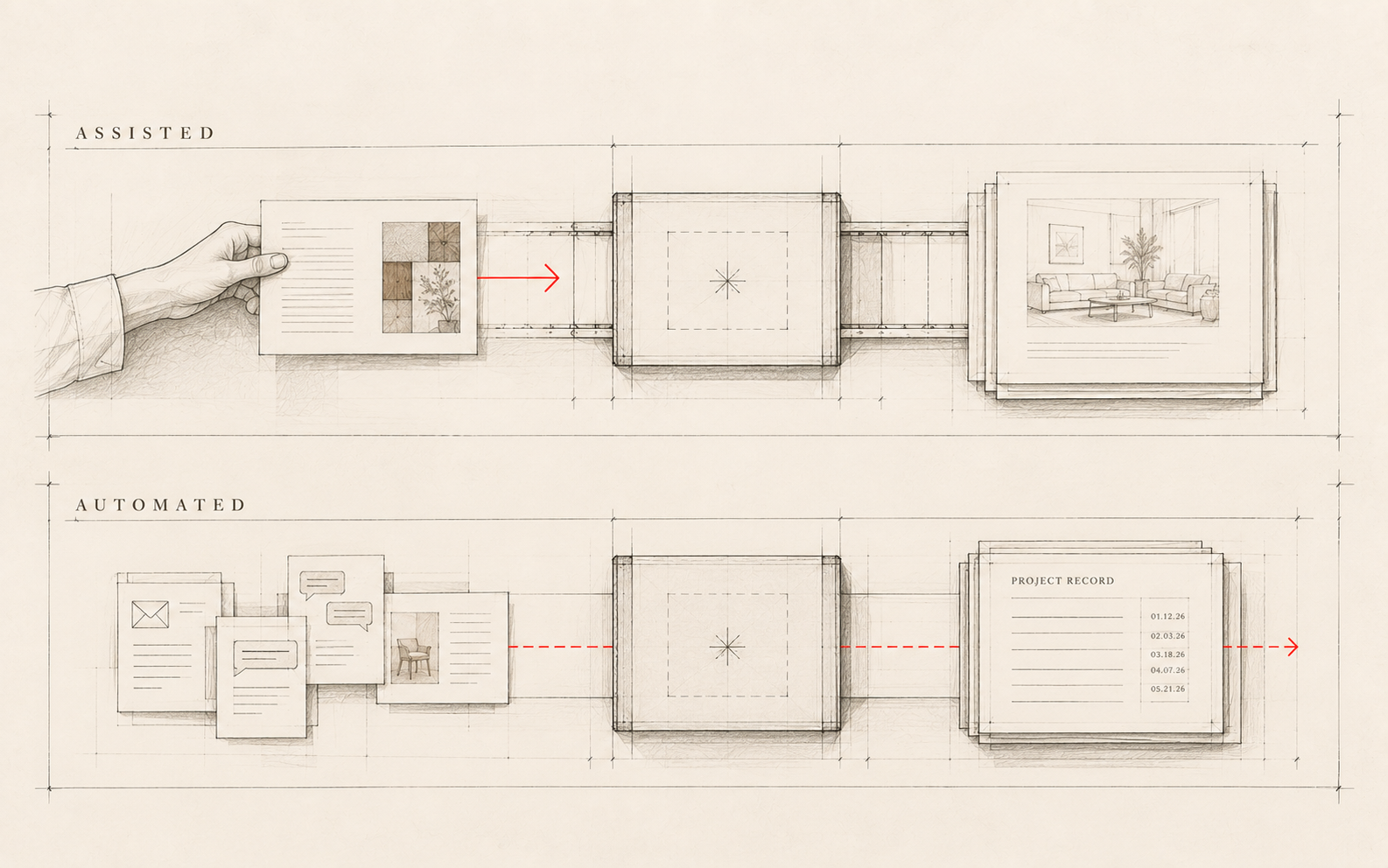
Most of the industry is pointing AI at the fun part: renderings, floor plans, idea generation. The record is where I went instead. The unglamorous, invisible, career-protecting record of what was decided and when. On purpose. That is the part that was quietly costing firms the one thing they could not afford to lose, and it is the part designers will never do by hand, because there is always a deadline in front of it.
And yes, I know what it means to ask someone to let software into their project email. Archen™ reads the project communication you connect to it, the email and the files, and turns it into a record you own. That is the whole job. It is not there to watch you work. It is there to make sure the work remembers itself.
I have built on both sides
I have made a physical product, the kind you design and specify and install, for seven years. Now I have built a software one. I trust what Archen™ is because I have stood in both places.
The client who started all of this, the one my husband could never quite keep straight, he still works with them. The difference is that the written record, the emails, the approvals, the files they send, sits in one place now. Archen™ cannot capture what was only said on a call, nobody can, but the moment a decision lands in writing, it is on the record for good. The tool I wished existed for him exists.
It did not stay where I expected
I built Archen™ for designers because design is what I know. We are going after designers first because it is my home and I owe it my best work, but the engine that turns project communication into a firm's record is bigger than one industry.
The name says it, actually. Archen™: architecture meets intelligence. I meant the buildings at first, the work I came from. But the meaning I kept was the metaphor, architecture as the invisible structure a firm is built on, the shape of everything it knows and decides, finally with an intelligence to hold it together. That is the thing worth building. Not another place to do data entry nobody has time for. A memory that just exists, so that no one ever again has to be afraid of what they forgot to write down.
If any of this was your experience too, I am letting a small group of firms in early while Archen™ is still young. I would like it to be yours.