The construction and design industry loses $31 billion a year to miscommunication. (FMI/PlanGrid, 2018) Not bad design. Not material failures. Not scheduling problems. Miscommunication.
That number comes from a 2018 FMI Corporation and PlanGrid study called "Construction Disconnected." They surveyed 599 construction leaders across the US. The finding: the industry loses $31.3 billion annually from two causes. $17 billion from poor communication between teams. $14.3 billion from poor project data. (FMI/PlanGrid, 2018)
$17B
Lost annually to poor communication between teams
$14.3B
Lost annually to poor project data
52%
Of construction rework is preventable through better data practices (Autodesk/FMI, 2021)
This is not just a construction problem
The same communication failures that cost the broader industry $31 billion happen on every design project. The verbal approval that never got written down. The scope change that happened on a Friday call and stayed in everyone's head until billing time. The contractor update that three people heard and zero people documented.
The root cause is not carelessness. It is infrastructure.
Nearly half of all rework
The FMI study found that 26% of all rework on construction projects traces back to poor communication between team members. Another 22% traces back to poor project data. The wrong version. The missing file. The decision that never made it into the record.
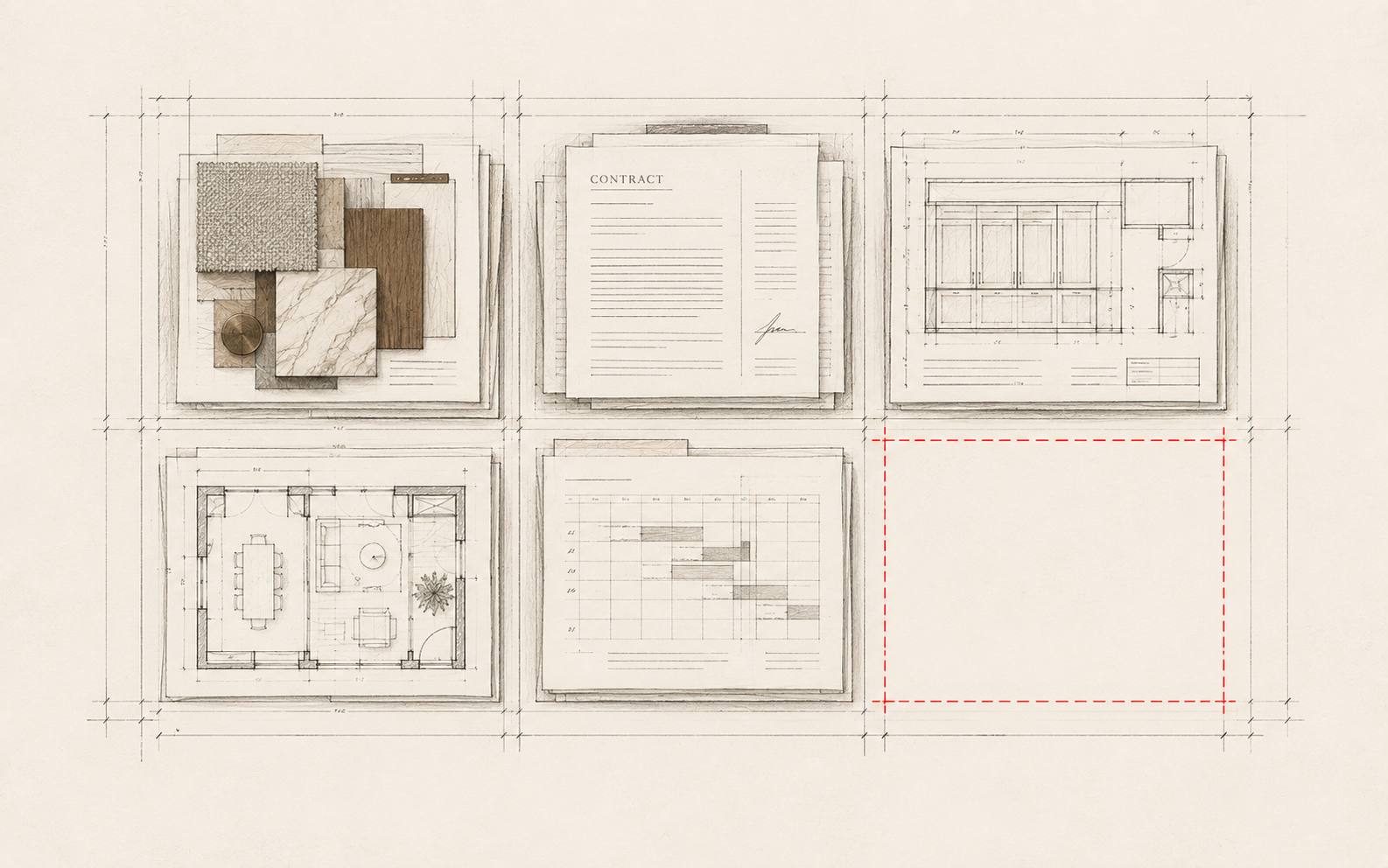
Combined, those two causes account for nearly half of all rework. Not material defects. Not design errors. Information failures.
A follow-up study from Autodesk and FMI in 2021 found that 52% of all construction rework is preventable through better data practices. (Autodesk/FMI, 2021)
“Preventable. Not inevitable.”
What this looks like on a design project
Consider a typical approval moment. A client says yes to a finish on a Thursday call. The designer logs off and starts another task. Nobody sends a recap. The information exists. Everyone on the call heard the same thing. But the record does not.
Six weeks later, during installation, the client does not remember approving that finish. They are not lying. They simply did not create a record either.
The dispute that follows is not about the finish. It is about the absence of a record.
This is what $31 billion (FMI/PlanGrid, 2018) in losses looks like at the project level. Not a single catastrophic failure. Thousands of small information gaps, each manageable on its own, compounding across every project, every firm, every year.
The Autodesk/FMI study found that only 12% of construction firms consistently incorporate project data into their decision-making. That means 88% of firms are making decisions in an information vacuum. Not because they are disorganized. Because the systems to capture that information automatically do not yet exist at most firms.
The interior design gap
The $31 billion figure is from the broader construction industry. The interior design subset has not been studied separately. No published ASID report, no academic study, has isolated the cost of communication failures specifically within design studios.
That gap is significant. Interior design projects are not less communication-intensive than construction projects. In some ways they are more so, because the relationships are personal, the timelines are long, and decisions are often made in informal settings: over samples on a dining table, in a showroom, on a walk-through, where documentation is an afterthought.
What firms that avoid this do differently
A 2025 PlanRadar study found that firms with consistent quality assurance and documentation practices maintained rework below 5% of budget at a significantly higher rate than firms without. A 19-point gap. (PlanRadar, 2025. Note: PlanRadar is a construction software vendor. This is a commercially interested vendor survey, not independent research. T3 signal, use for directional illustration only, not as a standalone cited statistic.)
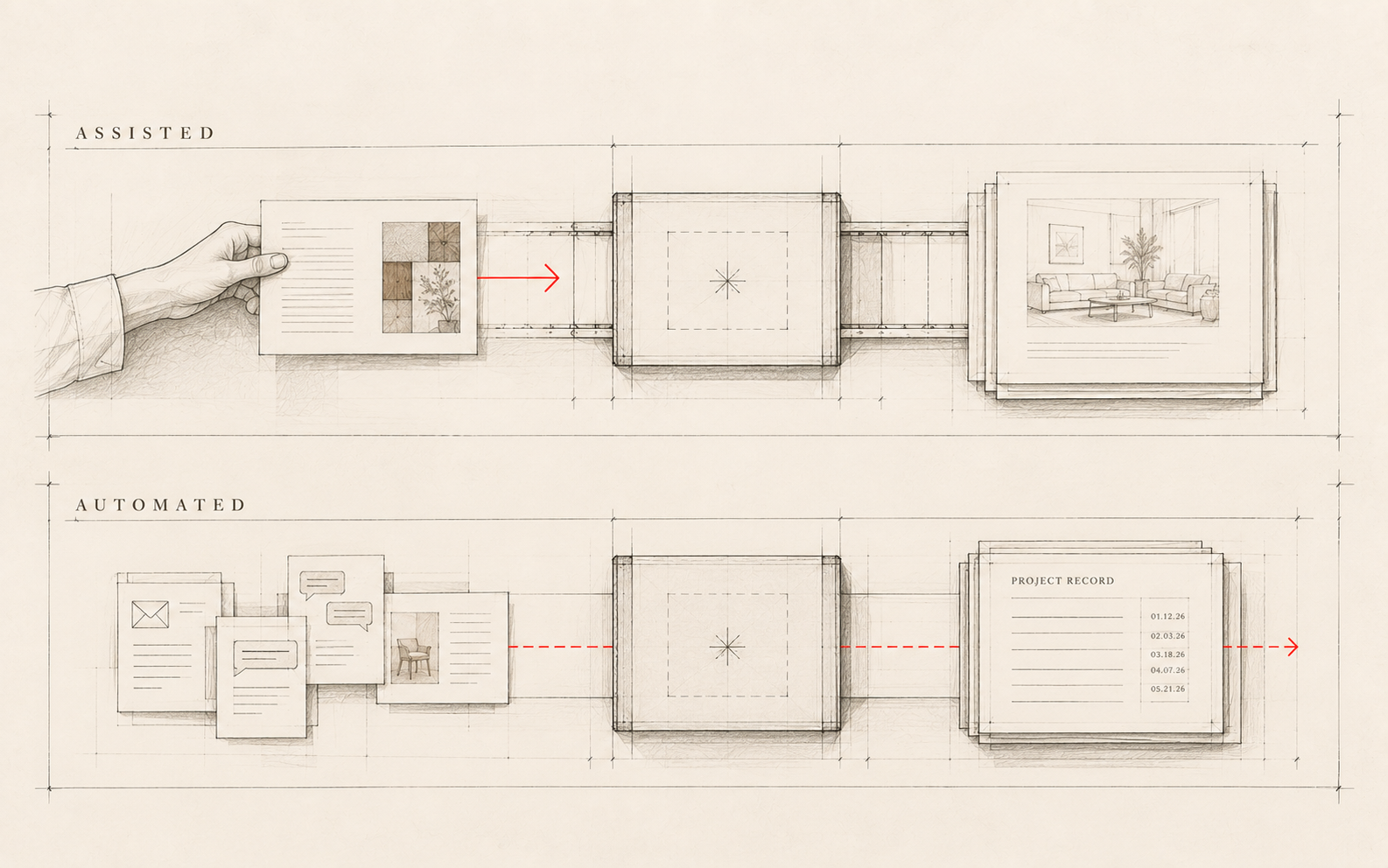
The difference is not talent. It is the presence of a system that captures decisions as they happen. Not in the recap email drafted on Monday and sent Wednesday. Not after the damage is done. In the moment.
The firms that prevent this are the ones that build the record while the project moves.
Archen™ was designed for this. It captures decisions as they happen inside your existing project communications, automatically, without adding a new step to the work.