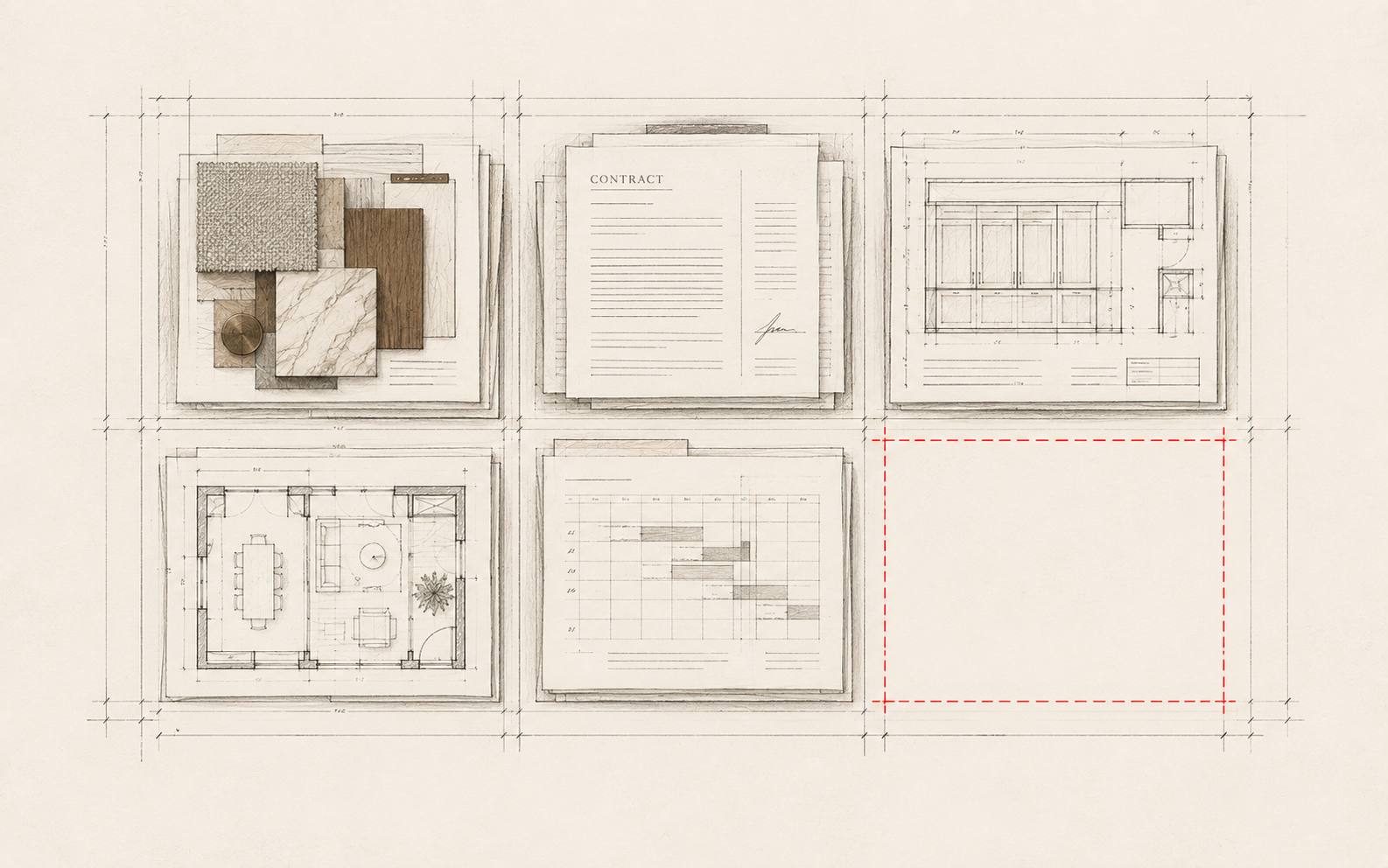
The best design firms are not better at design than everyone else. They are better at one thing most firms have not built yet: a discipline around documenting decisions.
The data is specific, and it comes from three separate findings, not one. Firms with formal written approvals at each design phase have 60% fewer late-stage revisions (Architectural Record). Firms that run structured project kickoffs with all decision-makers present have 40% fewer scope disputes (PSMJ Resources). Firms with prompt, disciplined change-order processes capture 95% more additional services revenue (Zweig Group). All three figures are cited in Monograph's blog post on managing scope creep, not in its benchmark report. See the source note below.
The documentation advantage
% difference versus firms without the practice
Source: Architectural Record, PSMJ Resources, and Zweig Group, as cited in Monograph's scope creep analysis.
Those three numbers point at three related practices, but they share a common thread: documentation discipline. Firms that document decisions carefully do not get surprised by disputes. They catch scope changes early. They have the receipts for every decision, which means they can bill for additional services with confidence.
“The firms without that system spend the same hours. They just spend more of them on disputes, reconstruction, and rework.”
Most firms know this and have not solved it
The 2026 Houzz State of the Industry report found that 57% of interior designers ranked efficiency improvements as their top investment priority. (Houzz, 2026.)
That number is striking. More than half of design professionals are actively trying to get more efficient. And the research Monograph cites suggests that formal documentation practices are among the highest-leverage changes available.
Most of them have not built one. Not because they do not want to. Because the systems that make it automatic do not yet exist at most firms.
Why informal works until it doesn't
Verbal approvals feel fine on small projects. The client is engaged. The team is small. Everyone remembers what happened on Tuesday's call.
The failure mode does not appear until later: when the project grows, when a team member changes, when the client's memory of Tuesday's call differs from the designer's. At that point, the absence of a record is not just inconvenient. It is expensive.
Scope disputes have compounding costs. The immediate cost is the conversation. The downstream cost is in the relationship, the delayed billing, the staff time spent reconstructing what happened.
The 40% fewer scope disputes figure (PSMJ Resources) is tied to structured project kickoffs, and it represents real project hours. The 95% difference in additional services revenue (Zweig Group) is tied to prompt change-order processes, and it is not because some firms charge more. It is because firms that document changes promptly can prove what was agreed to. When the client asks for something additional, the record is already there. The conversation becomes a confirmation, not an argument.
What a written approval practice actually looks like
The firms that build this habit tend to do one consistent thing: they close every decision with a written summary, even a brief one.
Not a formal document. Not a contract amendment. A two-sentence email: "This confirms your approval of the Arabescato Marble for the kitchen backsplash as discussed on our August 4th call." Sent before the end of the day.
That sentence exists. The approval is real. The record is there.
Scaled across a project, that habit changes what the firm can prove, what they can bill, and how quickly disputes resolve when they come up.
The structural problem
The reason most firms do not do this consistently is not discipline. It is friction.
Writing a confirmation email after every decision is one more task on a day that is already full. It falls off when the studio is busy. Then the project ends and the disputed approval is the one from the week the team was slammed and the recap never went out.
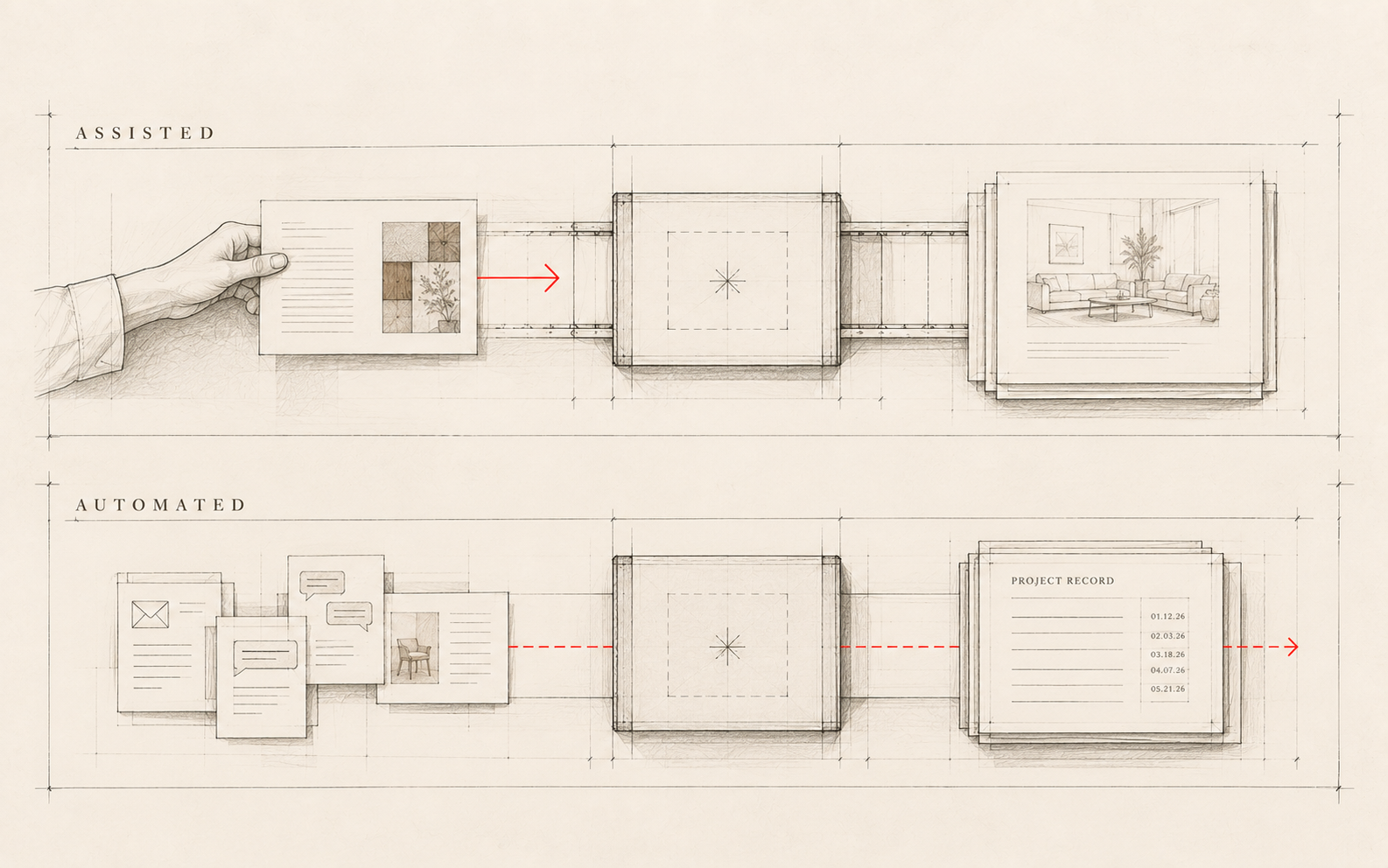
The firms that close this gap consistently have built systems, not just habits. Archen™ captures decisions from your existing project communications automatically. You do not have to write the recap email. The record builds itself.
The 60% difference in late-stage revisions does not require changing the work. It requires capturing what the work already produces.