The AI conversation in design is focused on the wrong layer of the business.
Every week, new tools launch for the output layer. AI mood boards. Client presentations generated from a brief. Floor plans built from a prompt. Faster renderings. Better visualizations. The promise is the same: design faster, design better, design at scale.
That is coming. Some of it is already here.
But the layer of design practice that AI is going to transform first is not the creative layer. It is the operational layer.
The wrong conversation
Consistently, when I talk to designers running active projects, the answer to "what is actually eating your day" is not concept generation. It is fielding the same question from the contractor, the vendor, the tile rep, the client, and the installer. Five different people who all need the same answer that already exists somewhere in the project record. Finding the decision from three months ago. Reconstructing what got approved on the Thursday call. Answering the same question for the fourth time because nobody can find where the answer was logged.
Scale that across a full project and a designer can be fielding 30 or more threads a day from people who all need information she already has somewhere. She is not a designer in those moments. She is the project's live information system. Every thread routes through her because there is no shared record.
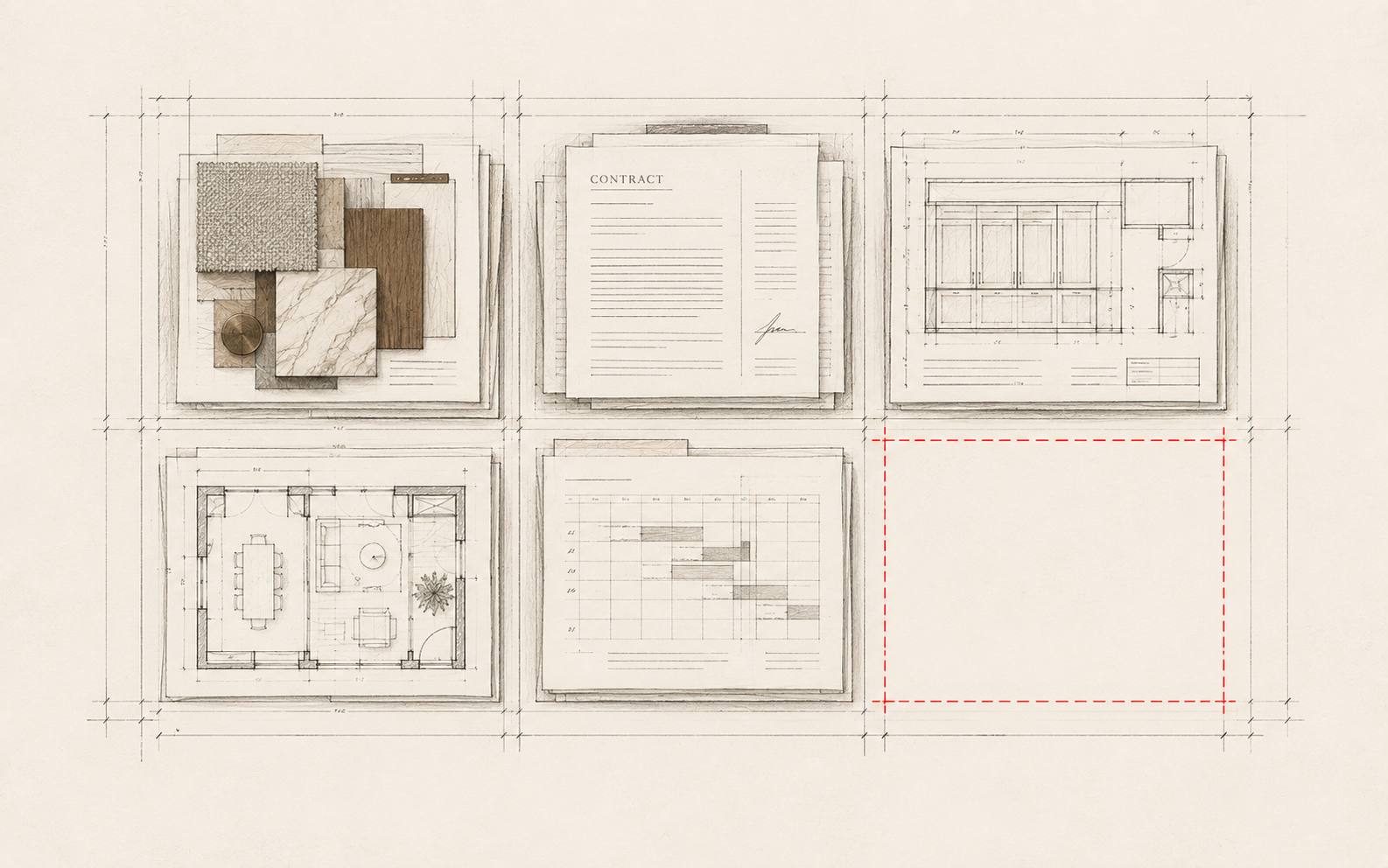
These are information problems. The tools getting attention do not touch them at all. The designer fielding 30 threads a day is not helped by a faster rendering engine. The problem is not the speed of design generation. The problem is that the project record exists in pieces, scattered across inboxes and personal notes and verbal approvals that never made it anywhere, and every answer has to pass through one person.
AI is actually well positioned to solve this.
What AI is actually good at in a practice setting
AI is not uniquely good at creativity. Creativity comes from practitioners who understand space, light, proportion, and the specific human beings they are designing for.
AI is good at reading large volumes of unstructured information and finding the signal.
A design project can generate thousands of communications. Emails. Call recordings. Site visit notes. Contractor threads. Client approvals buried in reply 14 of a thread nobody can find. The project history is there. It is just not organized.
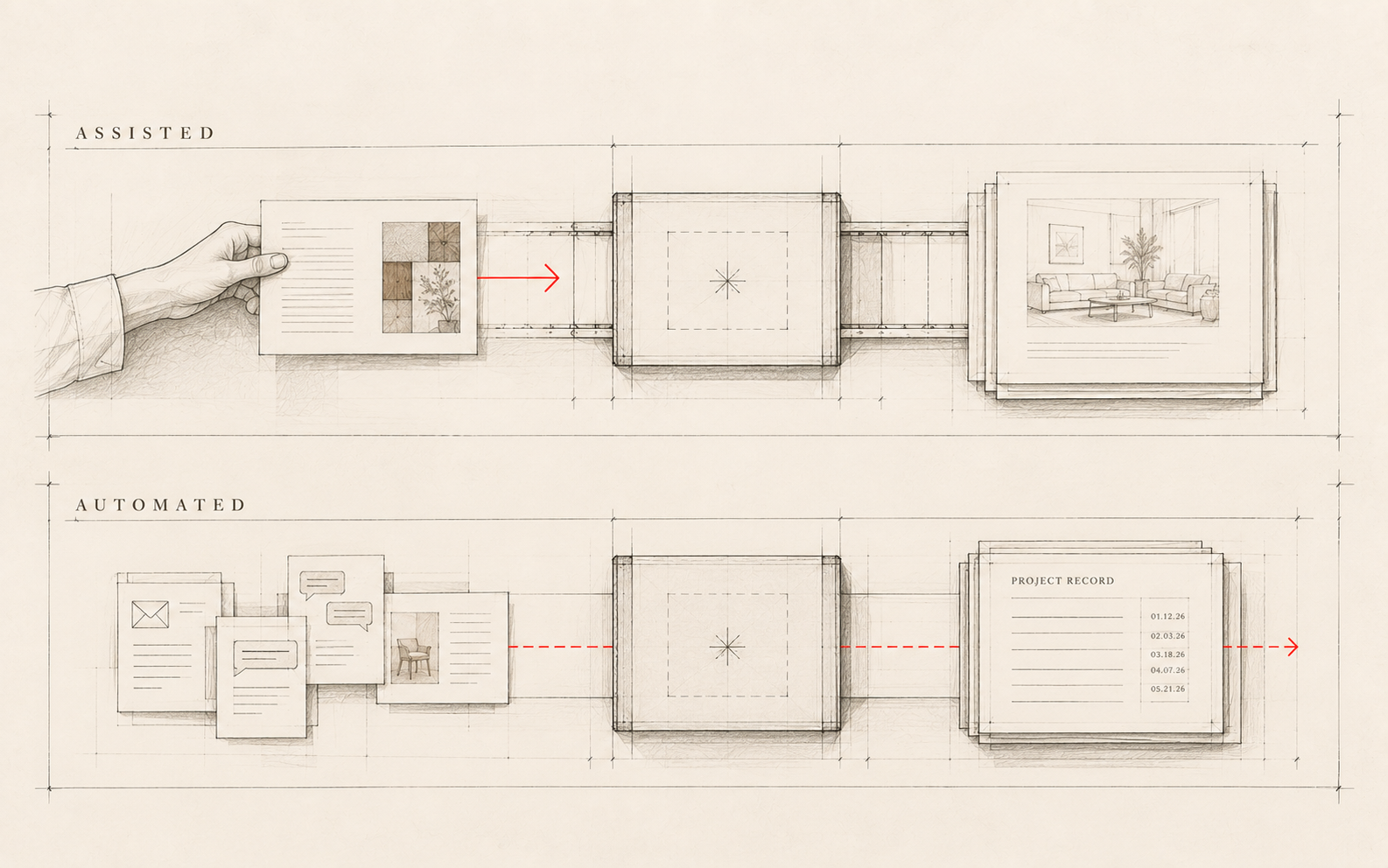
That is exactly where AI works. Not by designing for you. By reading what you have already produced and making it findable. By letting the designer stop being the information middleman and get back to the work.
The operational layer design practice has been missing
Interior design and architecture firms have the same need as engineering teams: the work is creative, but the infrastructure that supports it is operational. From what I see in this space, most interior design and architecture firms have not built that infrastructure. From what I have seen, most have not even named the need for it, at least not in the way product and engineering have.
The product and UX world already has a name for it: DesignOps. What I have not seen is that discipline seriously applied to interior design and architecture practice. That is what I mean when I say DesOps.
The firms I have seen ahead on this are not using AI to generate mood boards. They are using AI to make the operational layer of their practice automatic. An email thread that might have taken hours of archaeology to reconstruct is now searchable without the hunt. The scope change that would have been disputed in Week 16 is documented in Week 4 because the record built itself.
What this means for your practice
The generative tools are real and they will find their place. But the operational layer is where the leverage is right now, because it is where the time is going.
The tool that changes how your practice runs today is not the one that renders faster.
It is the one that makes sure your designer is not spending her afternoon fielding the same question from five different people because nobody has access to the project record.
It is the one that builds the record while the project moves, so the next project starts with context instead of Project Archaeology.
Archen™ is an AI-native OS for design operations. Not generative design. The operational layer your practice has been missing.
The AI conversation in design is worth having. Just start with the right layer.