You don't raise your rates because inflation went up. You raise them because you finally believe what you do is worth it.
Most designers know their rates are too low. The project ends. The rate stays.
The problem isn't the number. It's that the designer can't defend it.
When a client asks why you cost more than the other firm, most designers answer in the abstract. Experience. Vision. Attention to detail. These things are real. But a skeptical client isn't going to be moved by adjectives.
The firms that charge more can show more. They can walk a client through decisions made on previous projects. The problem caught before demo. The vendor negotiation that saved margin. The specification that changed before it went to install. They have a record. The record is the argument.
Raising your rates is a confidence decision. But confidence isn't a feeling. It's evidence. And evidence is built, project by project, from what actually happened.
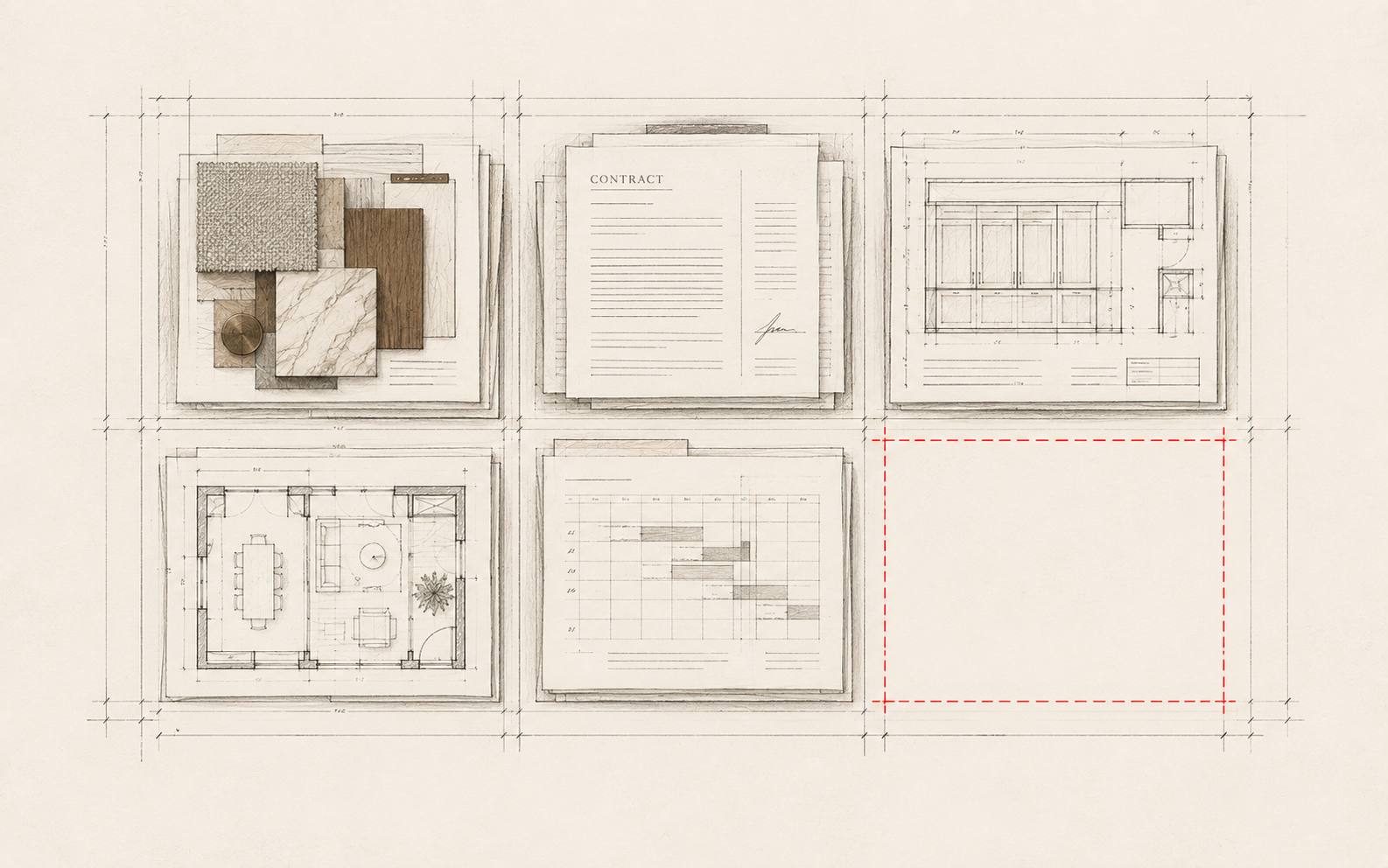
Most designers don't document what actually happened. They document what was delivered: the drawings, the schedule, the final selections. The decisions, the saves, the call at midnight because something arrived wrong. Those things evaporate. You knew what you did. The client moved on. Years later, you're still charging the same rate.
The defense of a higher fee is specific: here is what I did on the last project. The detail that would have failed inspection. The tile that arrived cracked and was back-ordered six weeks. What you did about it and how fast. That's your case. You just have to build it while you're working, not reconstruct it after the fact.
It sounds like this.
Client: "Your rate is higher than the other firm we're considering."
Weak answer: "I have twelve years of experience and I'm very detail-oriented."
Strong answer: "On my last project, the stone my client loved failed the frost-resistance spec for an outdoor terrace. I caught it before fabrication. We sourced an alternative from the same quarry, kept the install on schedule, and she didn't pay for a material swap after the fact. That's what I'm watching for."
One of those answers is a feeling. The other is a record.
What's in Archen™ from that project:
- The specification review note flagging the frost-resistance failure
- The vendor thread where the alternative was sourced
- The client's written approval of the swap
- The install timeline showing no delay
You said "kept the install on schedule" with confidence because you have the record that proves it.
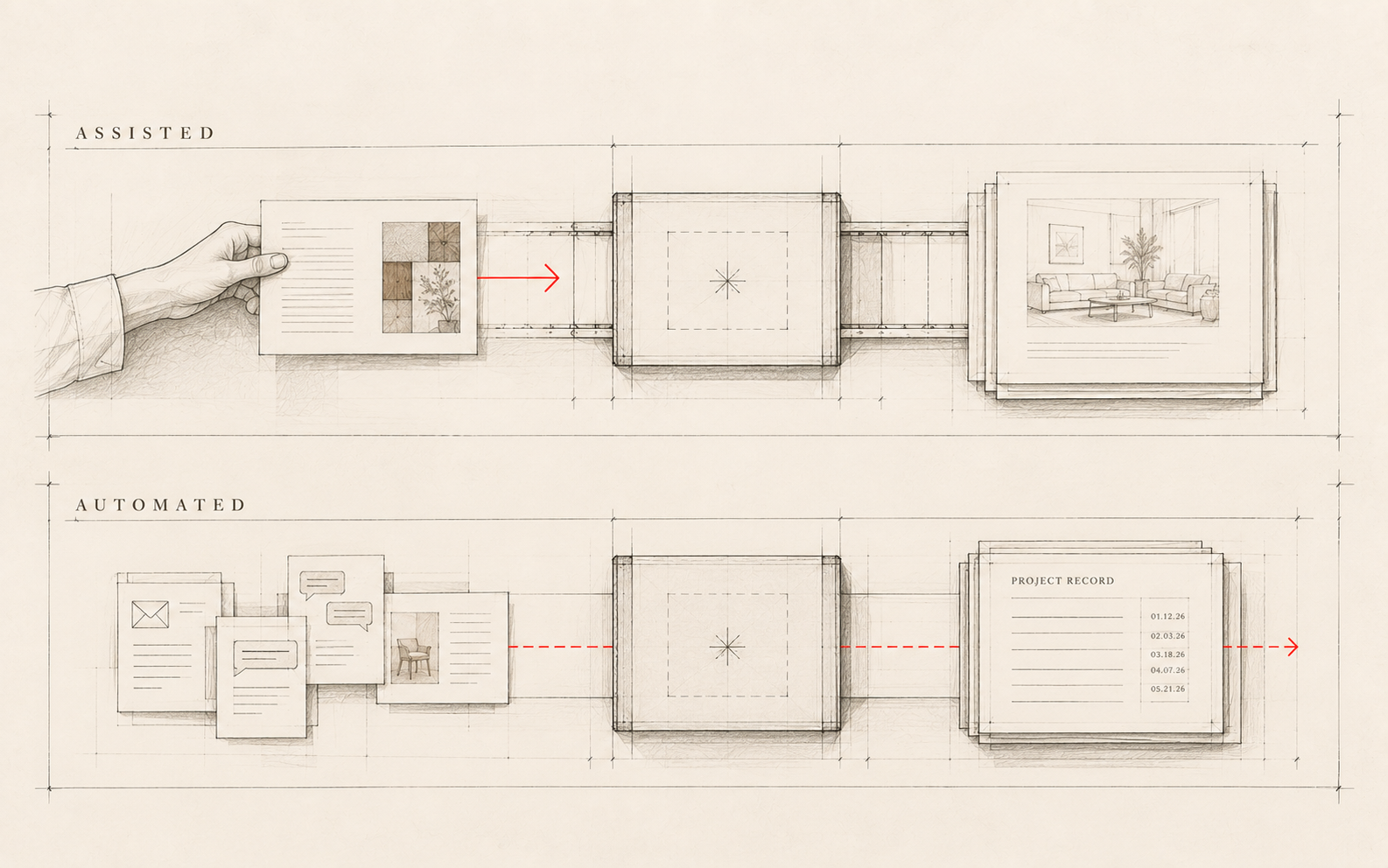
Archen™ builds that record as you work, from the conversations and emails you're already having. You don't have to write it up later. You just have to stop letting it disappear.
You can't defend a fee you can't prove. Start proving it.